Google December 2025 Core Updates: Timeline, Impact, and Next Steps
Reading Time: 9 min
 Share this article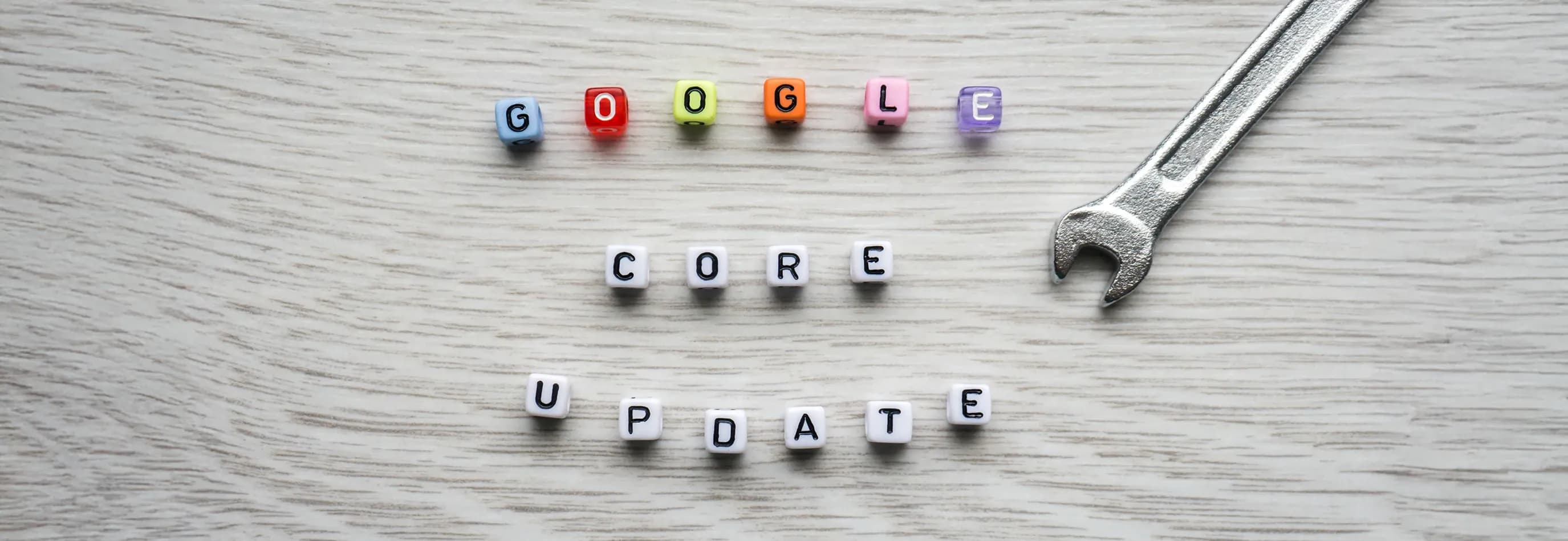
Key Takeaways
- The Google December 2025 Core Update rolled out between December 11 and December 29, reshaping rankings, clicks, and trust signals.
- This guide explains what changed, which sites were impacted, and how to build a resilient SEO strategy for 2026.
- Google core update timeline December 2025
- Impact of December 2025 Google core update
- SEO changes after December 2025 update
“Core updates are not about punishing websites. They are about improving search overall.” That line should be printed on a mug for every founder who has ever refreshed Google Search Console during the holidays.
Because if your traffic chart looked like a ski slope between December 11 and December 29, 2025, you were in very good company. The Google December 2025 Core Update was the third and final broad update of the year, and it finished rolling out on December 29, 2025.
Now it’s January 2026. The rollout is done. The panic can retire. And the real work begins: turning what happened into a sharper, more resilient 2026 SEO strategy — and using these insights to adjust your technical SEO strategy for sustainable growth
Google core update timeline December 2025
Quick answer: The rollout began December 11, 2025 and was completed December 29, 2025, spanning about 18 days.
Here’s the timeline you can confidently reference in stakeholder updates:
- Start: December 11, 2025 (Google confirmed rollout start).
- Rollout pattern: Many SEO tracking tools and industry observers reported wave-like volatility, with notable movement in mid and late rollout (often cited around Dec 13 and Dec 20). Treat daily spikes as signals, not verdicts.
- Completion: December 29, 2025 (rollout complete).
Why the dates matter in 2026: The best post update analysis compares pre vs post windows around the rollout. Google’s own guidance is clear: evaluate your content holistically, not by chasing single-keyword swings.
Impact of December 2025 Google core update
Quick answer: The update reshuffled rankings globally by re-weighting quality signals like intent satisfaction, topical authority, and trust signals. Some sites saw drops even when “rankings looked stable” because SERP features and AI answers increasingly absorb clicks.
What changed on the SERP (why clicks felt different)
Even when your position did not move dramatically, your traffic could. Why? The SERP is no longer just blue links. More queries end on Google without a click because users get answers directly on the results page.
A widely cited industry benchmark found that a majority of searches can end without an organic click, reinforcing why “rank” alone is not a full KPI anymore.
What niches felt it most
Based on industry tracking and post-rollout analyses, volatility tended to be higher in:
- YMYL categories like health and finance
- E-commerce, especially thin category pages and templated content
- Forums and communities, where quality and moderation signals matter
- News and media, where freshness and trust signals are constantly tested
What content patterns appeared to win
Across multiple core updates, Google consistently communicates the same direction: reward content that is genuinely helpful and created for people. Pages that performed better typically had:
- Clear intent match: The page answers the query early, then supports it with depth.
- Topical authority: Clusters that cover subtopics, comparisons, and next-step questions.
- Stronger trust signals: Real authors, real proof, updated facts, clear ownership, and transparency.
What content patterns appeared to lose
The most common “loser” pattern after a Google ranking update is not one specific tactic. It’s a vibe: content that reads like it was produced to rank, not to help.
Examples:
- A “best project management tools” post that lists 25 tools but offers no selection criteria, no real testing notes, and no audience fit guidance.
- E-commerce category pages with thin copy and no buying help, no comparison table, no FAQs, and no shipping clarity.
- AI summarised pages that repeat what top results already say, but add no expertise, no examples, and no proof.
This is exactly the kind of “SEO-only” output Google warns against when discussing core updates.
SEO changes after December 2025 update
Quick answer: In 2026, SEO measurement needs to expand beyond rankings and sessions into visibility, trust, and conversion quality.
Here are the practical SEO changes after December 2025 update that matter for business owners:
Shift your KPI language
- From: “We rank #3”
- To: “We grew qualified conversions from organic, and protected visibility across SERP features.”
Example: If your e-commerce store lost 12% organic sessions but your purchase rate rose from 1.2% to 1.6%, you might have fewer browsers but higher intent buyers. That is not failure. That is a funnel shift.
Treat content like a product
- Add “last reviewed” dates where relevant.
- Build pages that are maintained, not published and forgotten.
Example: A B2B SaaS pricing page that includes updated packaging logic, a comparison table, and a short FAQ about billing terms will usually outperform a generic pricing explanation page.
Make trust visible
In 2026, credibility is not just earned, it is displayed:
- Detailed author bylines
- Editorial policy pages (especially for YMYL)
- Clear company identity, address, and contact paths
- Secure site and clean UX
These are not “nice-to-haves” when you want stability across any seo update cycle.
What to do after a Google core update
Quick answer: Do not make chaotic changes. Do structured analysis, then improve what users experience.
Google’s own advice after a core update boils down to: avoid quick fixes, focus on meaningful improvements, and only remove content as a last resort.
Here’s a business-friendly action plan you can run in January 2026.
Step 1: Compare the right time windows
- Pre-update: Dec 1 to Dec 10
- During rollout: Dec 11 to Dec 29
- Post-update: Dec 30 to Jan 10 (and extend this as data accumulates)
Example: If you run a clinic website and your “symptoms” pages dropped but “treatment cost” pages improved, that points to intent re-alignment, not a sitewide penalty.
Step 2: Identify your “loser pages” by impact, not emotion
- Largest click loss
- Largest impression loss
- Largest query set change
Then ask four ruthless questions:
- Is the page still the best answer for the intent?
- Is anything outdated?
- Does it demonstrate real experience or expertise?
- Is it easy to scan and act on?
Step 3: Map intent shifts, not just rankings
- Informational
- Commercial investigation
- Transactional
- Navigational
Example: If “best CRM for small business” dropped but “CRM implementation checklist” rose, Google may be rewarding deeper, task-based content for your audience.
Step 4: Run a technical sanity check
- Core Web Vitals
- Mobile usability
- Indexing coverage
- Broken internal links
- Schema validity
You are not trying to “hack” the algorithm. You are trying to remove reasons a user would bounce.
Want a structured audit workflow, this is where a partner like Wisoft Solutions India often supports teams: connecting search data, UX friction points, and content priorities into one plan, without chasing shiny objects.
How to recover from Google core update
Quick answer: Recovery is usually the result of compounding quality improvements, not a single fix.
Google is explicit that core updates are broad. If you were hit, the answer is typically “improve overall quality,” and any recovery can take time.
Recovery playbook for 2026 (with realistic examples)
Refresh what is stale
- Update stats, screenshots, product availability, pricing examples, and feature sets.
- Add 2026 context where behaviour changed.
Example: A “best accounting software” page that still references 2023 UI or pricing will feel untrustworthy, even if the advice is decent.
Add proof, not fluff
- Case snippets
- Benchmarks
- First-hand testing notes
- Screenshots (where appropriate)
- Citations to credible sources
Example: Instead of “this approach improves conversions,” show “checkout drop-offs fell from 68% to 54% after adding guest checkout and clearer shipping timelines.”
Consolidate overlapping pages
If you have five posts targeting the same intent with slight keyword variations, consolidate them into one stronger page and redirect the rest.
Example: Merge “best email tools,” “top email software,” and “email marketing platforms” into one decision guide with a comparison table and use-case sections.
Strengthen E-E-A-T signals sitewide
- Author pages with credentials
- Clear editorial standards
- Company identity and policies
- References and source hygiene
This directly supports resilience across every Google algorithm update cycle.
Google algorithm update recovery tips
Quick answer: Focus on user value, structure, and proof. Avoid reactive churn.
- Rewrite intros to answer fast
Example: For “How to choose a logistics partner,” lead with a 3-point checklist, then explain. - Add an FAQ block to high-impact pages
Example FAQs for a service page:
- “How long does cloud migration take for a mid-sized company?”
- “What are the common risks and how do we mitigate them?”
- Improve internal linking like a guided tour
Example: A pillar page on “Digital marketing for manufacturing” should link to supporting guides on lead qualification, paid search, and conversion tracking. - Measure beyond traffic
If the SERP is absorbing clicks, your win can be:
- Higher brand searches
- Better assisted conversions
- Higher conversion rate from fewer sessions
Treat search as one part of demand, not the whole demand engine.
The December 2025 update is over, your 2026 strategy starts now
The Google December 2025 Core Update finished rolling out on December 29, 2025.
What it reinforced is not new, but it is stricter now: intent, usefulness, trust, and consistency win over cleverness.
So the next step is simple and very unglamorous: audit, improve, and build a content system that makes your site the obvious choice for users and for algorithms.
If you want a human way to approach it: pick one important page this week, improve it so a sceptical customer would trust it, and then repeat. That is how stable growth is built in 2026.
FAQs
1) What is a Google core update?
A Google core update is a broad change to Google’s ranking systems that can shift visibility across many sites and industries. It is designed to improve how Google evaluates relevance and quality, not to target a single tactic.
2) How long does it take to recover from a Google algorithm update?
Recovery after a Google algorithm update can take weeks or months, depending on how much improvement is needed and how competitive your space is. Sustainable recovery usually comes from upgrading content usefulness, E-E-A-T signals, and UX, not from quick SEO tricks.
3) What should I do first after a seo update?
After an seo update, start by comparing pre vs post periods in Search Console and identify the URLs with the biggest click and impression losses. Then audit those pages for intent match, freshness, and trust signals before changing anything major.
4) Why did my traffic drop even if rankings did not change much?
Because SERPs increasingly include on-page answers and features that reduce clicks, a Google ranking update can impact traffic distribution even without dramatic position changes. In 2026, track conversion quality and assisted metrics alongside rankings and sessions.
5) Should I delete pages that dropped during the Google Core update?
Usually no. After a Google core update, Google recommends improving content rather than deleting it, unless it is genuinely unhelpful. Consolidate, refresh, and strengthen the page’s value first.