

Mobile App Development Company in Dubai for Scalable Digital Products
Your app shouldn’t simply function. It should solve a real problem, deliver an intuitive experience and remain reliable as your user base grows. Wisoft Solutions is an experienced app development company in Dubai, building secure, scalable and user-focused applications for iOS and Android. From customer-facing mobile apps to enterprise platforms and marketplaces, we manage strategy, UX/UI, development, integrations and post-launch support.
 Less than 1% crash rate
98% release success rate
90% client satisfaction







Why Many Mobile Apps Fail After Launch
Launching an app has become easier, but building one that users value and businesses can scale remains challenging. Many applications reach the app stores only to face low adoption, poor retention, technical problems or rising maintenance costs.
The issue is rarely the idea alone. It’s usually how the product is researched, designed, developed and supported.

Features Built Without Validating User Needs
Businesses often begin with a long feature list before confirming what users genuinely need. The result is a complicated product that takes longer to launch without necessarily delivering more value. This can lead to unnecessary development costs and make the application harder to use and maintain. Features that appear valuable during planning may receive little engagement after launch, while more important user needs remain unresolved.

Confusing User Experiences
Users expect apps to feel clear and intuitive from the first interaction. Complicated onboarding, crowded interfaces and unclear navigation quickly lead to abandonment. Even useful functionality can underperform when users struggle to understand how to access it. Registration, onboarding, navigation, search, booking, payment and account management all need to feel connected rather than operate as separate interactions.

Technology That Can’t Support Growth
An app may work for its first hundred users but struggle as demand increases. Weak architecture, inefficient code and limited backend capacity can lead to crashes, slow performance and expensive rebuilding. Growth can also introduce requirements that were not necessary during the first release, including additional user roles, payment methods, integrations, locations or real-time functionality. If these possibilities are not considered during architecture planning, introducing them later can require significant redevelopment.

No Plan Beyond the Initial Launch
An app is not finished when it reaches the App Store or Google Play. Without ongoing updates, monitoring and optimisation, performance declines and user expectations move ahead of the product. Successful application development connects business strategy, user needs and technology from the beginning. That is the foundation around which our work is structured.
We offer top-notch custom hybrid and native app development services to help businesses streamline their operations, enhance customer experiences, and achieve their digital transformation goals. Our team of experienced developers, designers, and project managers leverage cutting-edge technologies and industry best practices to deliver high-quality, scalable, and secure custom applications that meet the unique needs of our clients.
Mobile App Services Built Around Specific Business Goals
Every feature should serve a clear user or commercial purpose. Our mobile app services cover the complete product lifecycle, from early research and prototyping to development, deployment and continuous improvement.
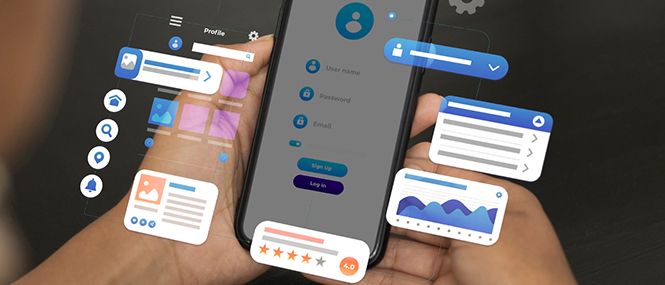
The problem: Standardised platforms may not support a company’s unique workflows, customer journeys or business model.
What we do: We create custom mobile applications designed around your users, operational needs and growth plans. Every product is developed with usability, performance, security and scalability in mind. The development approach can include customer-facing functionality, secure user accounts, administrative controls, backend systems and integrations depending on the product requirements. We also consider how information moves between users, administrators and existing business platforms so the application supports the wider operation rather than functioning in isolation. Where appropriate, the product can be structured around an initial set of high-priority features with a roadmap for future releases. This helps businesses launch a focused application while retaining the flexibility to introduce new capabilities as adoption and requirements evolve.
Pro tip - Start with the highest-value features first. A focused MVP can validate demand and user behaviour before you invest in a larger product roadmap.
Custom Mobile App Development
The problem: Standardised platforms may not support a company’s unique workflows, customer journeys or business model.
What we do: We create custom mobile applications designed around your users, operational needs and growth plans. Every product is developed with usability, performance, security and scalability in mind. The development approach can include customer-facing functionality, secure user accounts, administrative controls, backend systems and integrations depending on the product requirements. We also consider how information moves between users, administrators and existing business platforms so the application supports the wider operation rather than functioning in isolation. Where appropriate, the product can be structured around an initial set of high-priority features with a roadmap for future releases. This helps businesses launch a focused application while retaining the flexibility to introduce new capabilities as adoption and requirements evolve.
Pro tip - Start with the highest-value features first. A focused MVP can validate demand and user behaviour before you invest in a larger product roadmap.
iOS App Development
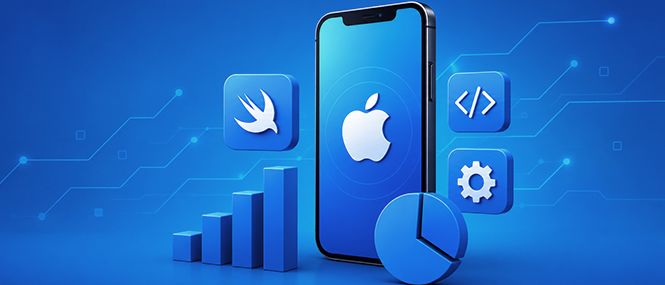
The problem: Apple users expect fast, polished and consistent experiences across iPhone and iPad devices.
What we do: Our developers build secure iOS applications aligned with Apple’s technical and interface standards. We manage development, testing, integrations and preparation for App Store submission. Development considers how the application behaves across supported Apple devices, including screen layouts, navigation, permissions, notifications and any device functionality required by the product. We also test important user journeys and integrations before preparing the application for submission. Where an existing backend or business platform is involved, the iOS application can be connected through APIs so users receive a consistent experience while business data remains connected to the systems supporting operations.
Pro tip - Design for the Apple ecosystem from the beginning. Navigation, permissions, notifications and device behaviour should be considered before development, not just before App Store submission.
Android App Development

The problem: Android applications must perform consistently across a wide range of devices, screen sizes and operating-system versions.
What we do: We build reliable Android apps that are optimised for responsiveness, usability and device compatibility. Structured testing helps identify performance issues before release. Because the Android ecosystem includes devices with different screen dimensions, hardware capabilities and operating-system versions, compatibility needs to be considered throughout development rather than only during final testing. We plan interfaces and functionality to perform consistently across the supported device range and test important workflows under different conditions. Backend integrations, notifications, location functionality, payments and other required capabilities can also be incorporated according to the application's business requirements.
Pro tip - Define your priority device and OS range early. Supporting every possible Android configuration can add unnecessary testing and development complexity.
Cross-Platform App Development
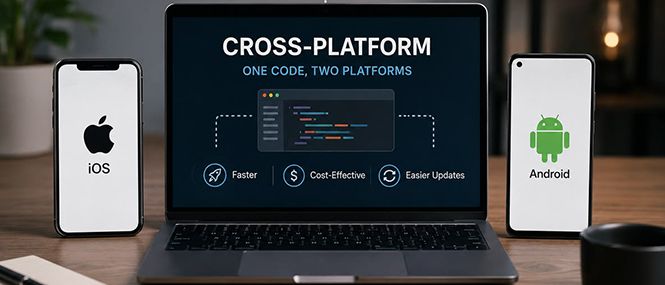
The problem: Developing separate native applications can increase timelines, costs and ongoing maintenance requirements.
What we do: We use frameworks such as Flutter and React Native to create cross-platform apps from a shared codebase. This approach can support faster deployment while delivering a consistent experience across Android and iOS. A shared codebase can also simplify future updates by reducing the need to maintain two entirely separate applications. However, cross-platform development is not automatically the right choice for every product. We assess required device capabilities, performance expectations, user experience, integrations and future plans before recommending this approach. Where Flutter or React Native is suitable, we structure the application to maximise shared development while still accounting for platform-specific behaviours on iOS and Android.
Pro tip - Don’t choose cross-platform development based on cost alone. Consider performance, device-specific functionality, integrations and long-term product plans before selecting the framework.
Enterprise Application Development
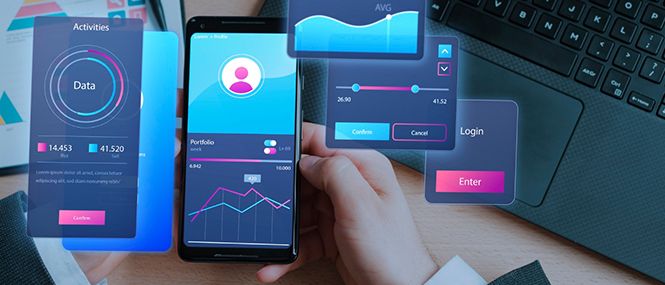
The problem: Internal processes often depend on disconnected tools, spreadsheets and manual communication, limiting visibility and productivity.
What we do: We develop enterprise-grade apps that support operational workflows, employee access, approvals, reporting and secure data management. Applications can be connected to existing ERP, CRM and internal systems. Enterprise applications may support different user roles, departments, locations and approval levels, so access and information flows need to be carefully structured. Depending on the requirement, applications can support field teams, management dashboards, task assignment, document access, approvals, reporting and other internal workflows. Integration is equally important. Connecting the application with CRM, ERP or existing internal platforms can reduce duplicate data entry and provide employees with more direct access to the information they need. We plan these connections around existing processes rather than introducing another isolated system for teams to manage.
Pro tip - Map roles, permissions and approval workflows before development starts. Clear process logic early on can prevent expensive changes later.
E-Commerce and Marketplace Apps

The problem: Mobile shoppers abandon purchases when discovery, product selection or checkout becomes slow and complicated.
What we do: We develop secure and intuitive e-commerce applications with organised product navigation, personalised experiences and streamlined checkout journeys. We can integrate inventory, payment, delivery and customer-management systems. For marketplace applications, the product may also need to support different experiences for customers, vendors and administrators. This can include vendor onboarding, catalogue management, order processing, commissions, payments and reporting alongside the customer-facing shopping journey. Product analytics can provide further insight into search behaviour, abandoned journeys, repeat purchases and feature adoption. These insights can help businesses refine merchandising, promotional activity and retention strategies as the application grows.
Pro tip - Optimise the complete buying journey, not just checkout. Search, product discovery, navigation and repeat-purchase experience can all influence conversion.
On-Demand and Booking Applications

The problem: Service businesses need to manage availability, bookings, payments and communication without creating friction for customers or internal teams.
What we do: We build applications with appointment scheduling, live availability, location services, notifications, payment options and administrative dashboards. Depending on the business model, the application may need to coordinate several participants within the same transaction, such as customers, service providers, drivers, practitioners or administrators. Availability, location, pricing, status updates and notifications therefore need to remain synchronised throughout the journey. Administrative functionality can provide teams with visibility over bookings, cancellations, schedules and customer activity, while integrations can connect the application with existing operational or customer-management platforms.
Pro tip - Treat availability as a live operational system. Booking status, schedules, payments and notifications should stay synchronised for customers and service teams.
Application Reengineering and Modernisation

The problem: Older applications may suffer from slow performance, outdated interfaces, security vulnerabilities or technology that is difficult to maintain.
What we do: We assess the existing app’s architecture, code, user experience and integrations before recommending targeted improvements or complete modernisation. Our team can update the interface, optimise the backend and rebuild unstable components. The assessment helps determine whether the existing product can be improved incrementally or whether its technical limitations are creating greater long-term cost and risk. We consider factors such as technical debt, outdated dependencies, backend performance, security, device compatibility and the difficulty of introducing new features. Where a rebuild is required, existing functionality and user behaviour can provide valuable insight into what should be retained, improved or removed from the next version rather than treating modernisation as a purely visual redesign.
Pro tip - Don’t automatically rebuild from scratch. A technical assessment can reveal which components are worth retaining and where rebuilding will deliver greater long-term value.
API and Third-Party Integrations

The problem: An isolated app creates manual work and incomplete customer or operational data.
What we do: We connect mobile applications with CRM and ERP platforms, payment gateways, maps, booking engines, WhatsApp Business API, analytics tools and other third-party services. For example, a booking application may need to retrieve availability from an existing system, process a payment, create or update a customer record in the CRM and send confirmation or reminder notifications. These interactions need to happen reliably without requiring teams to repeatedly transfer information between platforms. We map the required data flows, authentication requirements and actions that should occur between systems before implementing the integration. This helps the application become part of the business's wider digital infrastructure rather than another independent source of customer and operational data.
Pro tip - Map the data journey before connecting systems. Define what information moves where, when it moves and which platform remains the source of trust.
App Maintenance and Performance Optimisation

The problem: Operating systems, devices, dependencies and user expectations continue to change after launch.
What we do: Our ongoing support covers application updates, performance monitoring, security patches, bug resolution and compatibility improvements. We also use product data and user behaviour to identify opportunities for optimisation. Maintenance can also include adapting the application when Apple or Google introduces platform changes that affect existing functionality. Monitoring crash reports, loading times and other technical indicators helps identify issues before they significantly affect the user experience. Beyond technical stability, ongoing development can introduce improvements based on analytics, customer feedback and changing business priorities. This allows the product roadmap to evolve according to real-world usage rather than remaining fixed around assumptions made before launch.
Pro tip - Plan for post-launch improvement from day one. Crash data, performance metrics, analytics and user feedback should continuously inform the product roadmap.
How We Turn an App Idea Into a Scalable Product
A strong application begins well before coding. Our development process reduces uncertainty, aligns teams and validates key decisions before extensive development begins.

Discovery and Product Definition

Strategy, UX and Prototyping

Development, Integration and Testing

Deployment, Monitoring and Iteration
Industry Experience That Shapes How We Build Your App
An application strategy must reflect how users behave within a particular industry. The product journey that works for an e-commerce customer will differ from one designed for a patient, employee or property buyer.
Mobile App Development for Retail
Retail customers move between mobile browsing, physical stores, marketplaces, and delivery platforms before making a purchase. We build retail apps that connect product discovery, inventory, checkout, loyalty, delivery, and in-store experiences in one seamless journey. From fashion and supermarkets to electronics and multi-brand retailers, our apps support features such as personalised offers, click-and-collect, returns, secure payments, and POS, CRM, and inventory integrations. Arabic and English support also helps UAE retailers serve customers across different shopping journeys. For businesses managing large portfolios, functionality can also support project or property categories, location-based discovery, favourites and personalised alerts. Enquiries can be connected to CRM systems so sales teams receive relevant property and prospect information. For brokers and developers serving international buyers, multilingual experiences and direct communication options can further support the investment journey.
Mobile App Development for Hopitals and Clinics
Healthcare applications need to make specialist discovery, appointment booking and patient communication simple and secure. We develop apps that support patient journeys, scheduling, reminders, teleconsultation and system integrations. Healthcare apps may also need to support different user roles, including patients, doctors and administrative teams, while keeping access to information appropriately controlled. Depending on the provider's infrastructure, applications can integrate with appointment or patient-management systems to connect mobile interactions with existing workflows. Notifications can further support appointment reminders, follow-ups and other relevant patient communications.
Mobile App Development for Schools
Education apps need to serve students, parents, teachers or administrators through clearly defined user roles. Solutions may include learning content, enrolment, attendance, assessments, notifications and progress tracking. The experience can be structured according to the needs of each user group. Students may need access to lessons, assignments and progress information, while parents may prioritise attendance, announcements or communication. Teachers and administrators may require separate functionality for managing content, assessments and reporting. Integrations can also connect the application with existing learning or student-management systems where required.
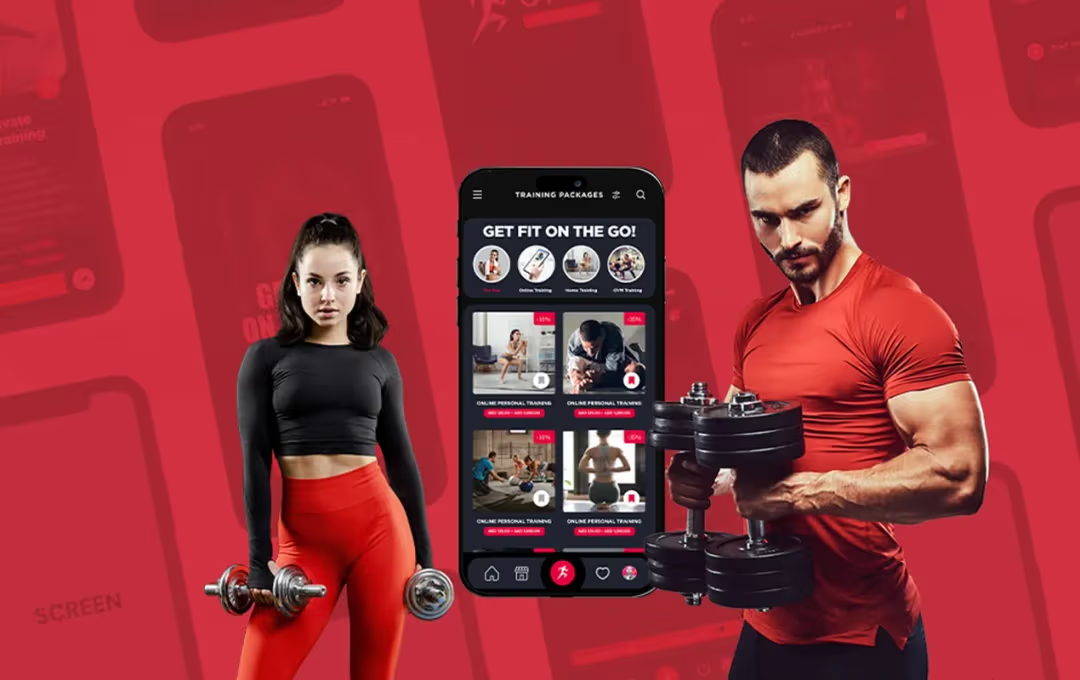
Transforming Lives: Launching a Dedicated Fitness App for the UAE
- Developed a custom mobile application to seamlessly connect UAE fitness enthusiasts with professional personal trainers and nutritionists.
- 6,282 high-quality leads and registrations acquired directly through the app’s optimized user onboarding and booking funnel.
- Integrated intent-based search and push notification features to keep users engaged and active in their fitness journeys.
- Engineered a user-centric UI/UX focused on practical lifestyle enhancements, event tracking, and physical training activity management.
App Development Deep Dive — Connecting the Fitness Community
In the highly competitive UAE fitness industry, a seamless digital experience is essential. Dive into our mobile app development strategy to see exactly how we transformed DiFit's vision into a robust iOS and Android platform, combining intuitive design with a powerful backend to successfully onboard thousands of users and certified professionals.
Experiences That Speak for Us
Real experiences from clients who have trusted us to deliver quality, transparency, and lasting value.

"We worked with Wisoft Solutions starting from the style guide. It was really creative and then we started working with them on the website. They were very helpful, very swift, they had plenty of ideas. We are quite satisfied with this experience. I r..."
Mr. Bassam El-Rifai
VIG Training

"My website looked very professional. Since then I have recommended the Wisoft Solutions team to many of my clients and they were extremely happy about it. I can recommend them with confidence from my own personal experience that Wisoft Solutions prov..."
Mr. Sijo Mathews
Compass Finance Solutions

"Team at Wisoft Solutions understood our real need for website development which is basically based on marketing our product. They understood and we came together then we set for number of days to understand the need exactly you know how the website s..."
Mr. Surajit Das
Makita

15+ Years of Building Digital Products That Adapt
Wisoft Solutions has delivered digital projects across Dubai, the GCC, India and international markets for more than 15 years.
During that time, mobile technology has moved from basic applications to complex platforms supporting payments, automation, personalisation and real-time services. That experience helps us separate valuable product decisions from unnecessary features and technical complexity.
We Define the Product Before We Develop It
We clarify the business goal, target audience and core use case before selecting technology or building features. This helps keep the product focused and commercially relevant.
We Design Around Real User Journeys
Every screen and interaction should help the user complete a meaningful action. We prioritise clarity and usability rather than adding features that complicate the experience.
We Build With Scalability in Mind
The app’s architecture is planned around expected usage, data requirements and future functionality. This makes it easier for the product to evolve as the business grows.
We Connect the App With Your Business Systems
Applications deliver more value when they integrate with the systems already supporting sales, operations and customer service. We plan APIs and third-party connections early in the project.
We Use Data to Guide Improvement
Product analytics can reveal where users leave, which features they adopt and what prevents conversion. These insights help prioritise updates after launch.
We Support the Product Beyond Release
Deployment is the beginning of the app’s real-world lifecycle. Our maintenance and optimisation services help the product remain stable as technology and user expectations change.
Areas we serve in Dubai
Explore the areas we serve across the UAE, with dedicated solutions for businesses and customers

What Dubai Businesses Ask Before Developing an App

Start With a Clear Plan for Your Mobile App
Have an app idea but aren’t sure which features, platform or technology you need?
We’ll assess your objective, audience, required functionality and technical considerations before recommending the right development approach. You’ll receive a clearer view of what to build first, what can wait and what the project requires to scale.
Speak with Wisoft Solutions, a trusted app development company in Dubai, and turn your idea into a practical, user-focused digital product.